


Our client came to us with an idea that was difficult even to picture: a future metropolis where homes exist directly inside trees – as part of nature, growing with it.
There was no concrete plan. Only a question: what if this were possible?
That is exactly where conceptual 3D visualization becomes valuable. When an idea is too early for construction and too complex for a sketch, CGI turns into a thinking tool. It gives space for imagination, testing, failure, and discovery. You can build an entire world around an idea just to see whether it holds.
So we began with the hardest question: what could a home fully integrated into a tree actually look like? To find the answer, we looked at sources where architecture, nature, and adaptation already meet:


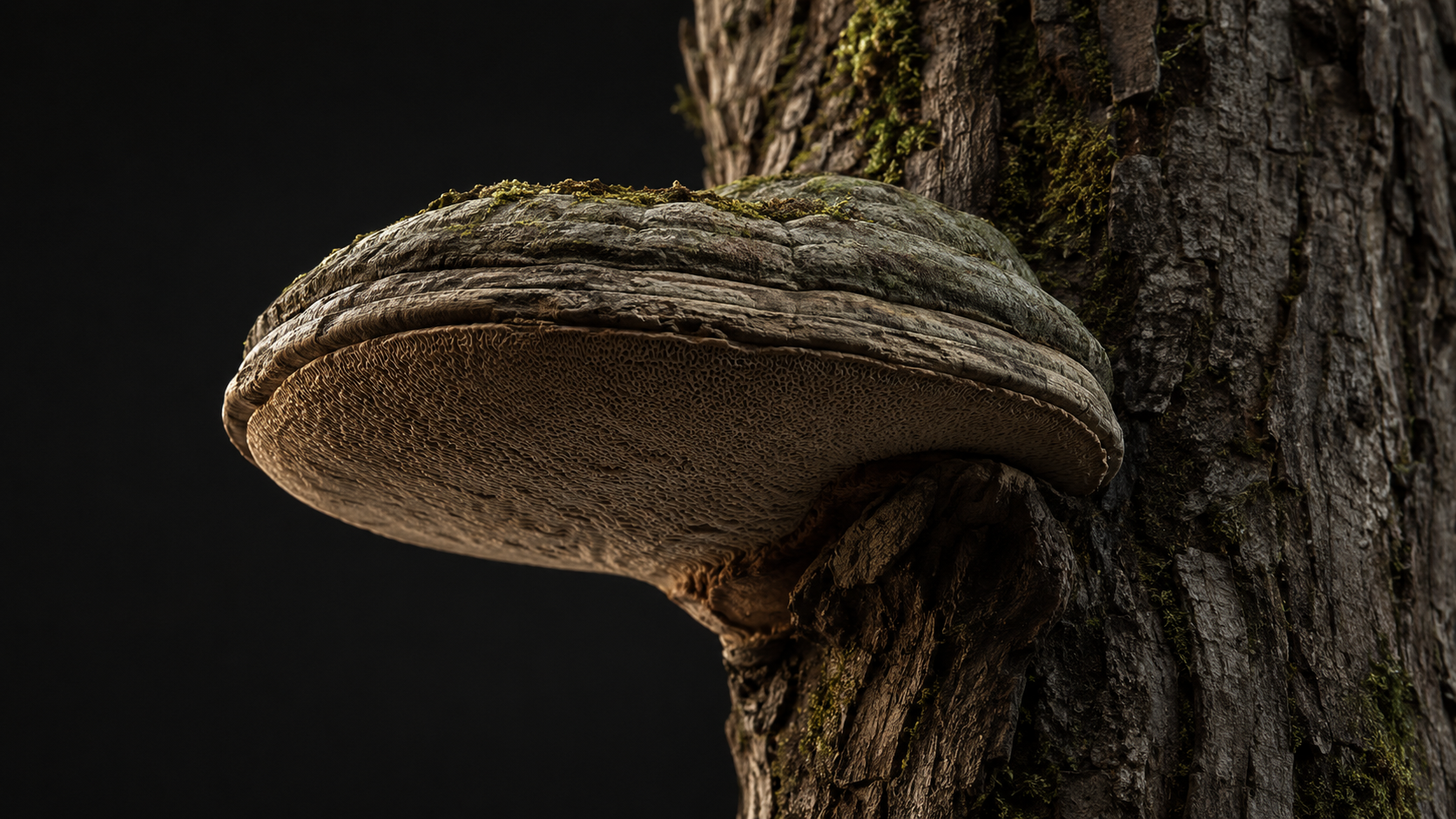
Tree fungi became the first reference. They grow directly from the body of a tree, claiming space within its structure. Their circular, layered forms gave us a natural starting point for the architectural modules.

Parametric architecture helped us develop that logic further. Its algorithm-generated forms often feel organic, as if they were grown rather than built.
Parametric architecture helped us develop that logic further. Its algorithm-generated forms often feel organic, as if they were grown rather than built.
Parasitic architecture gave the idea a spatial framework. This field explores how new structures can exist inside, beside, or on top of existing ones. Together, these references gave us a direction. But the real test began in 3D.


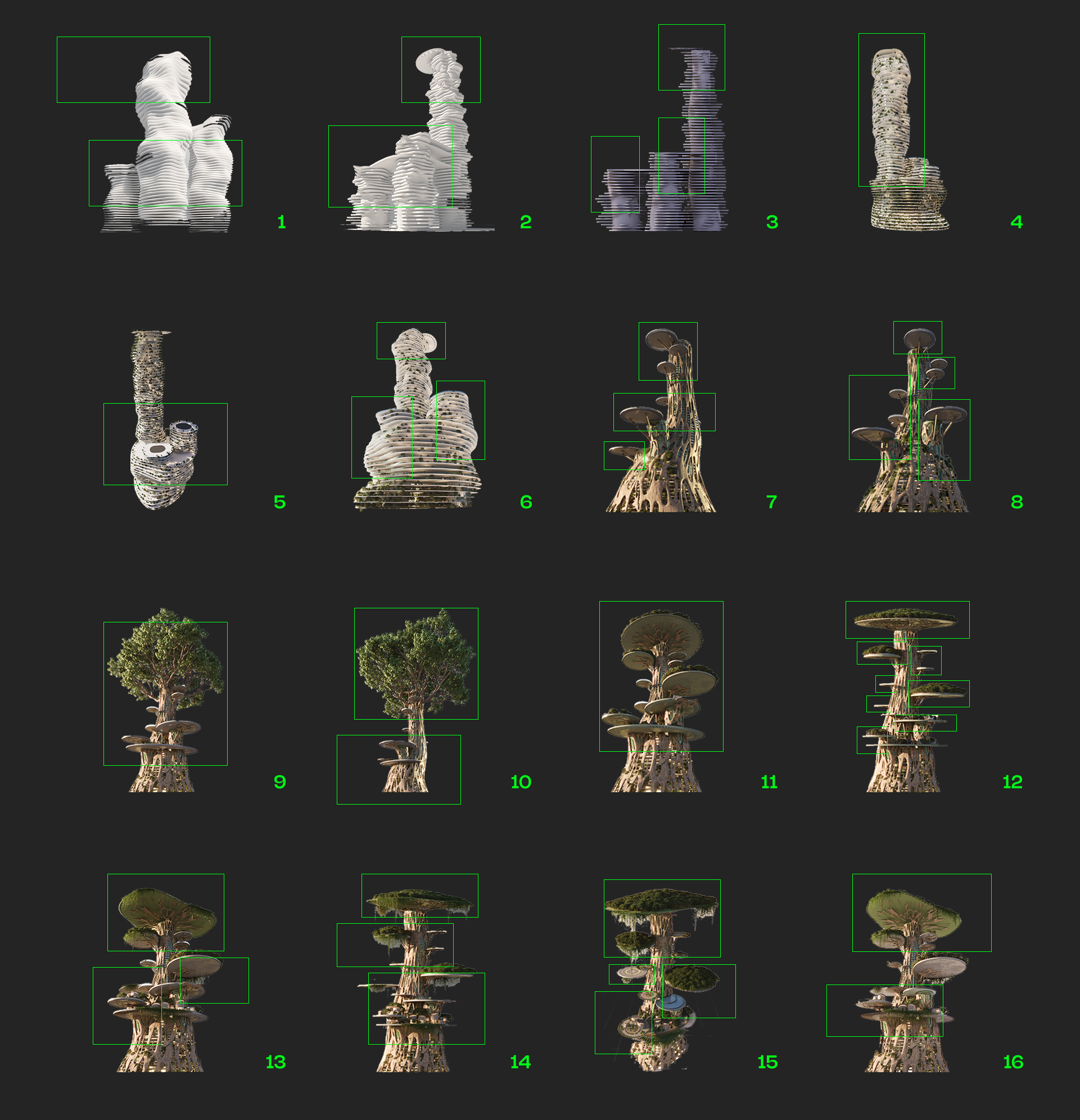
From these three ideas, we started building 3D models. Each of them became a way to test proportion, attachment, scale, and meaning. Below is a series of iterations we worked through before arriving at the final version — the one where shape and meaning finally aligned.
From these three ideas, we started building 3D models. Each of them became a way to test proportion, attachment, scale, and meaning. Below is a series of iterations we worked through before arriving at the final version — the one where shape and meaning finally aligned.
Once the module found its logic, we moved from object to world. The next step was to place every element into a single environment and see how they worked together as a living system: trees, modules, bridges, water, movement, wilderness, and human activity.
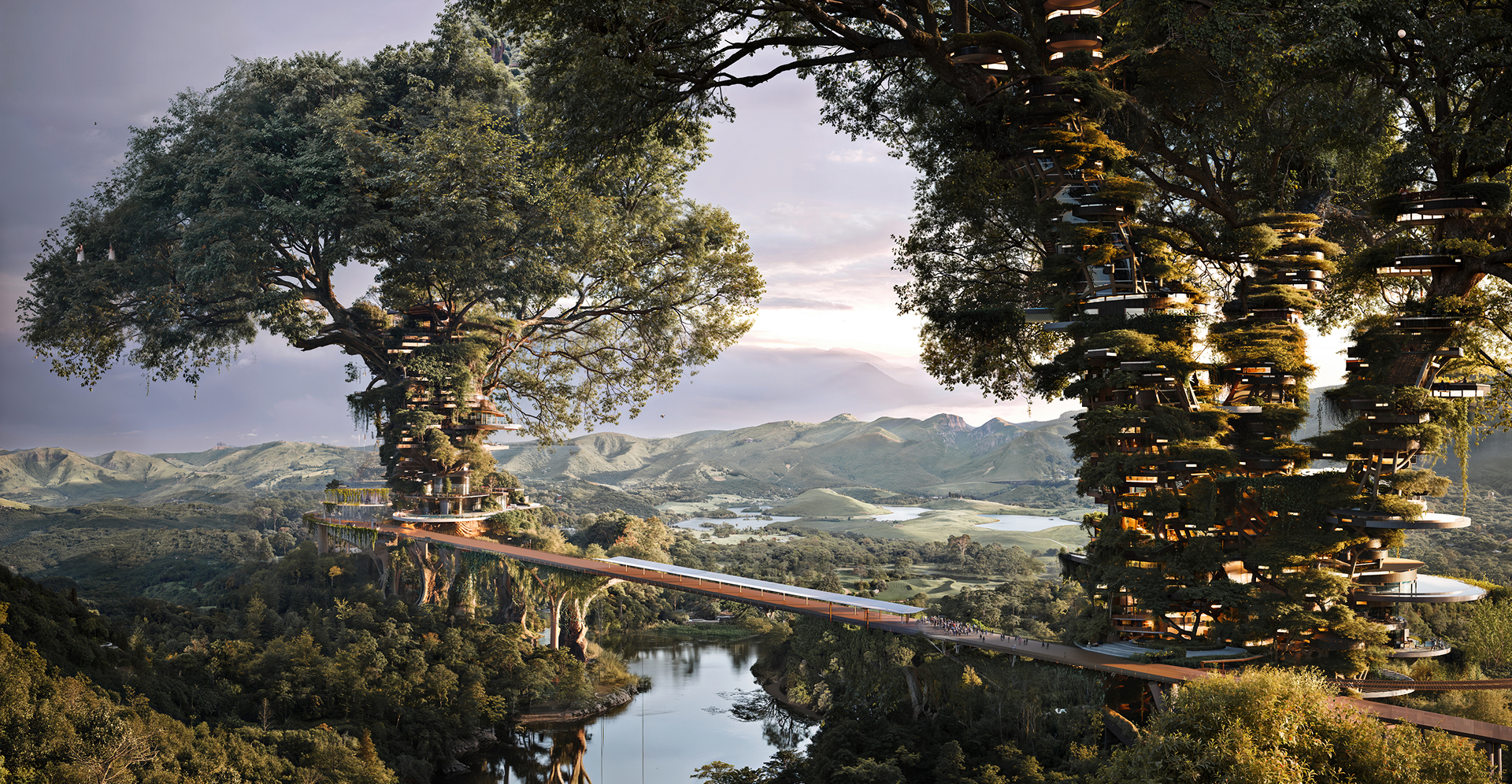
We chose species that grow to exceptional heights — sequoias and eucalyptus. Their scale allowed us to imagine full multi-story structures within and around the trunk. The modules, shaped after tree fungi, each received a different function: housing, communal areas, pools, and helicopter pads.
These two giant trees are connected by a bridge. It serves as a both a pedestrian route and the connective tissue between two vertical neighborhoods. Far below, beneath the bridge, ordinary trees, a river, rocks, and wilderness remain visible. The wild stays as the foundation on which everything rests.
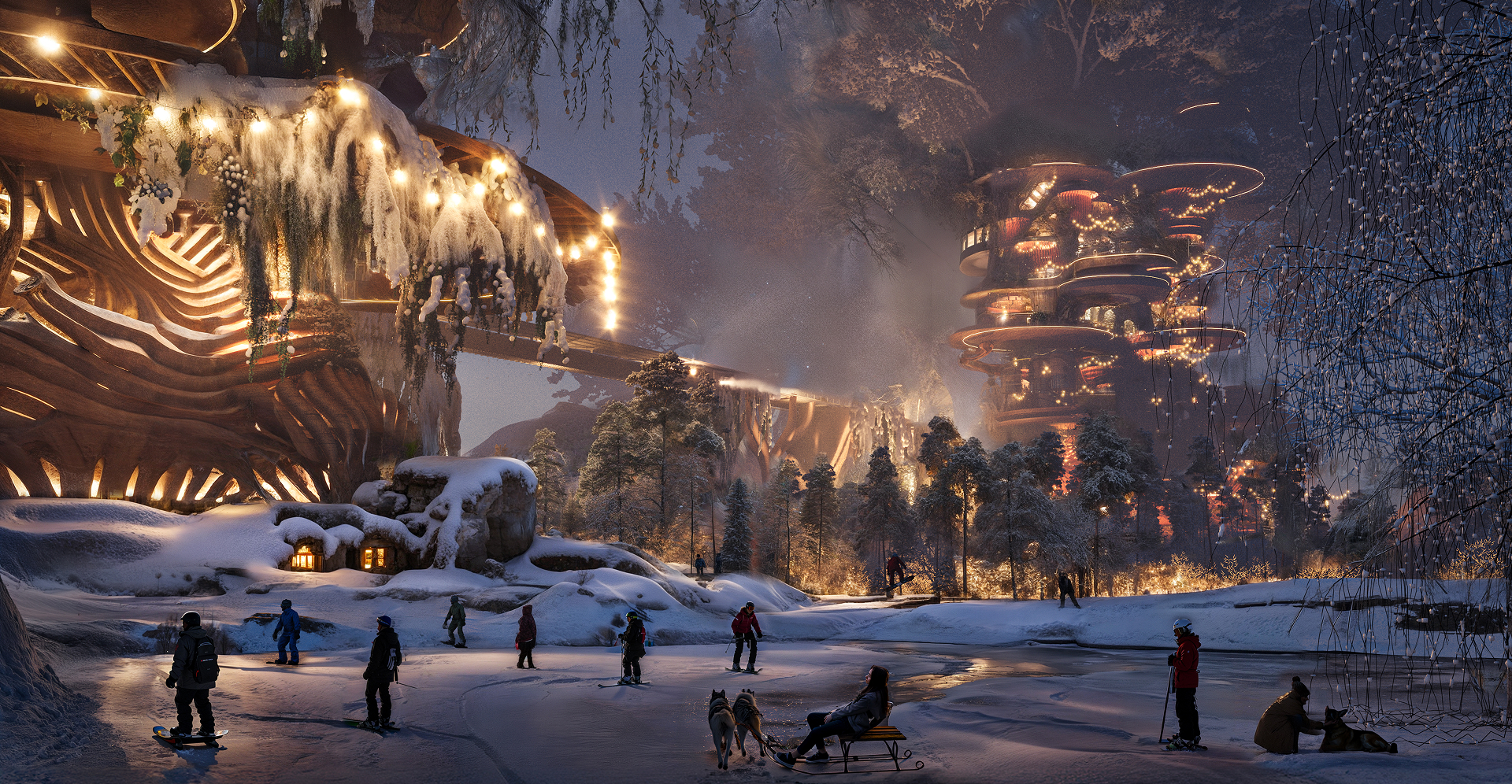
To stress-test this world, we visualized it across two seasons — two different ways of inhabiting the same place.
%201.jpg)
After building the world from the outside, we moved closer — into the everyday life inside it.
This local 3d frame shows a communal zone within one of the modules, with plants, small trees, and the entrance to the residential area. People move through the space, pause, talk, and simply exist there. These ordinary gestures make the concept feel less like a structure and more like a place.
In the corner of the frame, a woman is meditating. She is not placed at the center of the composition, but she is close to the center of its meaning. She expresses one of the project’s key ideas most clearly: a person finding her rhythm alongside nature.

But a world like this also needs a system of movement.
The bridge creates a walkable connection between complexes, while also becoming a path above the forest. In the air, helicopters offer fast transit, aerial views, and access to landing pads at the top of each module. On the water, vessels connect the complex to the wider landscape and open the river as a space for leisure.
In winter, the infrastructure changes character. Frozen water becomes part of the system: ice rinks, sledding areas, and seasonal routes appear. What works as transport in summer becomes a gathering place in the cold. Together, these routes turn infrastructure into part of the ecosystem — flexible, seasonal, and alive.


Conceptual visualization makes an idea real enough to work with. For Nobilitree, that meant building an entire world, stress-testing every decision, and finding form for something that existed only as a question. Projects like this can live in competition portfolios, future utopias, games, films, etc. That is what we enjoy most: building worlds that are not yet built but can already be imagined.


Housing that grows together with trees sounds like a fantasy. For our client and us, it became a visual research task: to give form, scale, and logic to a bold, complex idea that is difficult to imagine — and even harder to realize. In the article, we show how we approached it.